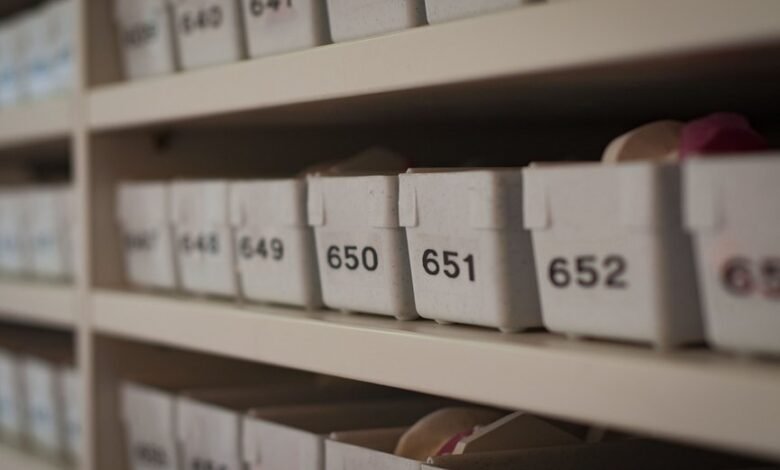
A methodical approach to browse public registry archives begins with defining the scope and entry types. Each identifier will guide targeted searches within date ranges and relevant filters. Metadata must be read and cross-checked for provenance and custodianship. Validation criteria should be established to compare items for consistent lineage. Findings should be documented with evidentiary detail, enabling traceable access, while the workflow remains clear and repeatable for future inquiries. This setup invites the next step to unfold with careful, systematic scrutiny.
Identify the Public Registry Archive Scope and Entry Types
The Public Registry Archive Scope defines the boundaries of what constitutes a record within the collection and specifies the timeframe, geographic coverage, and organizational units included.
The entry types are documented with explicit metadata fields, ensuring traceability and consistency.
Data lineage is maintained across records, clarifying provenance, transformations, and custodianship, while archival scope governs retention, access, and contextual relationships for disciplined, transparent discovery.
Locate Each Record: Navigating Search and Filter Tools
Locating each record requires methodical use of search and filter tools tailored to the Public Registry Archive interface; users should begin with precise identifiers or date ranges to narrow the result set efficiently. The process offers a scope overview of search parameters and filters, clarifying data provenance while maintaining navigational clarity. Efficient querying supports disciplined exploration and accurate record retrieval.
Read Metadata and Cross-Reference for Provenance
Reading metadata and cross-referencing for provenance begins by consolidating the identifiers obtained through prior search and filter actions. The process emphasizes meticulous data governance, ensuring each attribute aligns across records. Cross-reference aids provenance validation, clarifying origins, timestamps, and custodianship. This disciplined approach fosters transparent lineage while preserving freedom to explore connections without ambiguity or excessive interpretation.
Validate, Compare, and Document Findings Across Items
This phase systematically validates, compares, and documents findings across the items by establishing consistent criteria, applying uniform assessments, and recording evidentiary details for each identifier.
The process emphasizes reproducible conclusions, objective discrepancies, and traceable sources, while acknowledging discovery pitfalls and archival formats.
Findings are organized, summarized, and archived for future reference, ensuring transparent methodology and verifiable integrity across all records.
Conclusion
The exercise proceeds with meticulous restraint, yet the archive’s perfection remains charmingly fallible. Each record’s metadata is parsed, cross-checked, and cataloged, revealing a pristine chain of custody that somehow survives every minor hiccup. Irony surfaces as the system’s rigid filters uncover a surprisingly human pattern of custodial drift, reminding investigators that even in well-ordered registries, provenance is never entirely immune to interpretation, or to the occasional, charmingly inevitable timestamp quirk.